Position-Based Invoicing
Background information on position-based invoicing and its implications.
1. Background
In November 2021, we switched our accounting and invoicing. We went from invoice-based to position-based. As a result, there may be minor discrepancies of a few cents on invoices.
2. What Has Changed?
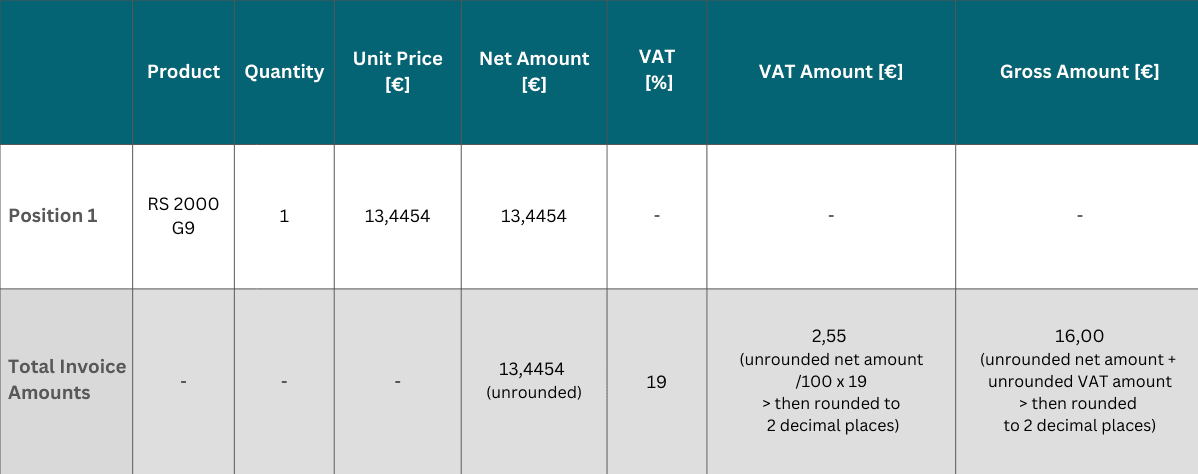
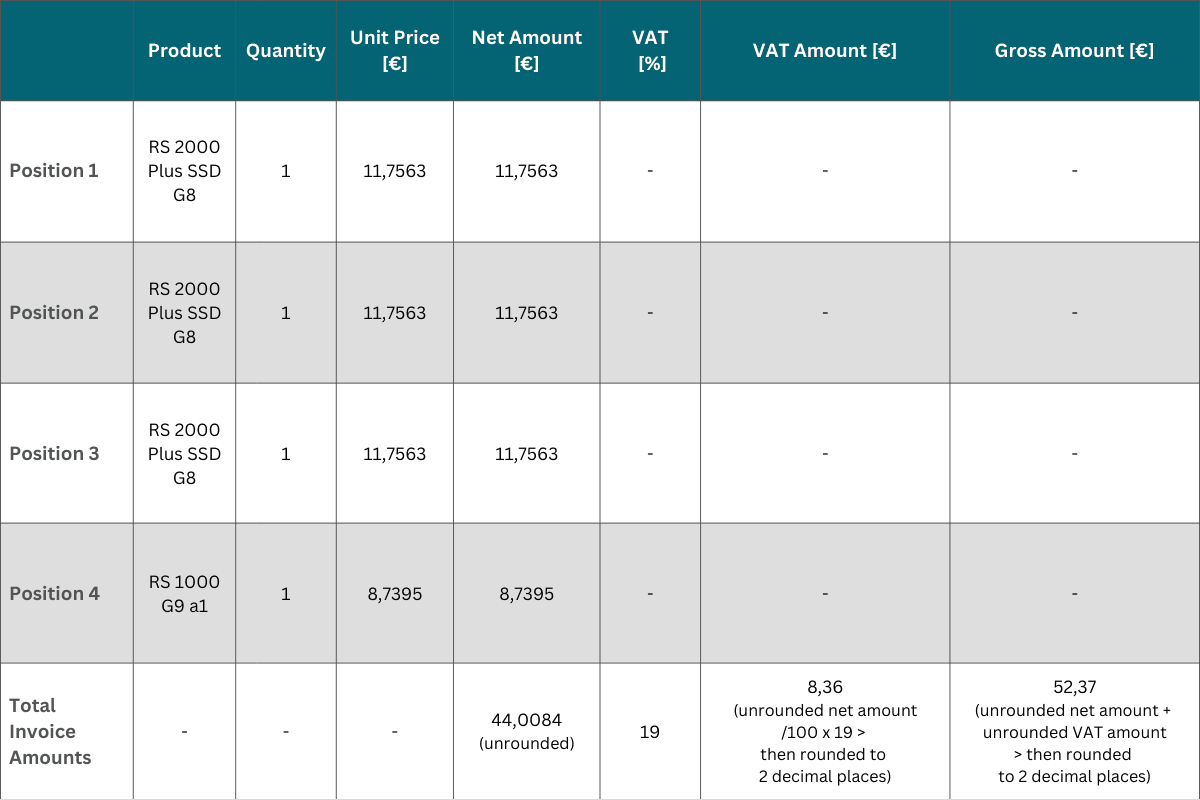
Previous Method: Invoice-Based Invoicing
- The total net amount was added up across all positions (= products).
- The VAT and gross amounts were then calculated for the total invoice, with unrounded values and an indefinite number of decimal places for each.
- Intermediate steps were rounded to two decimal places on the invoice, even though the internal calculations continued with unrounded figures.
- These rounding differences led to ambiguities in accounting, particularly for business customers with their own accounting units.
Current Method: Position-Based Invoicing
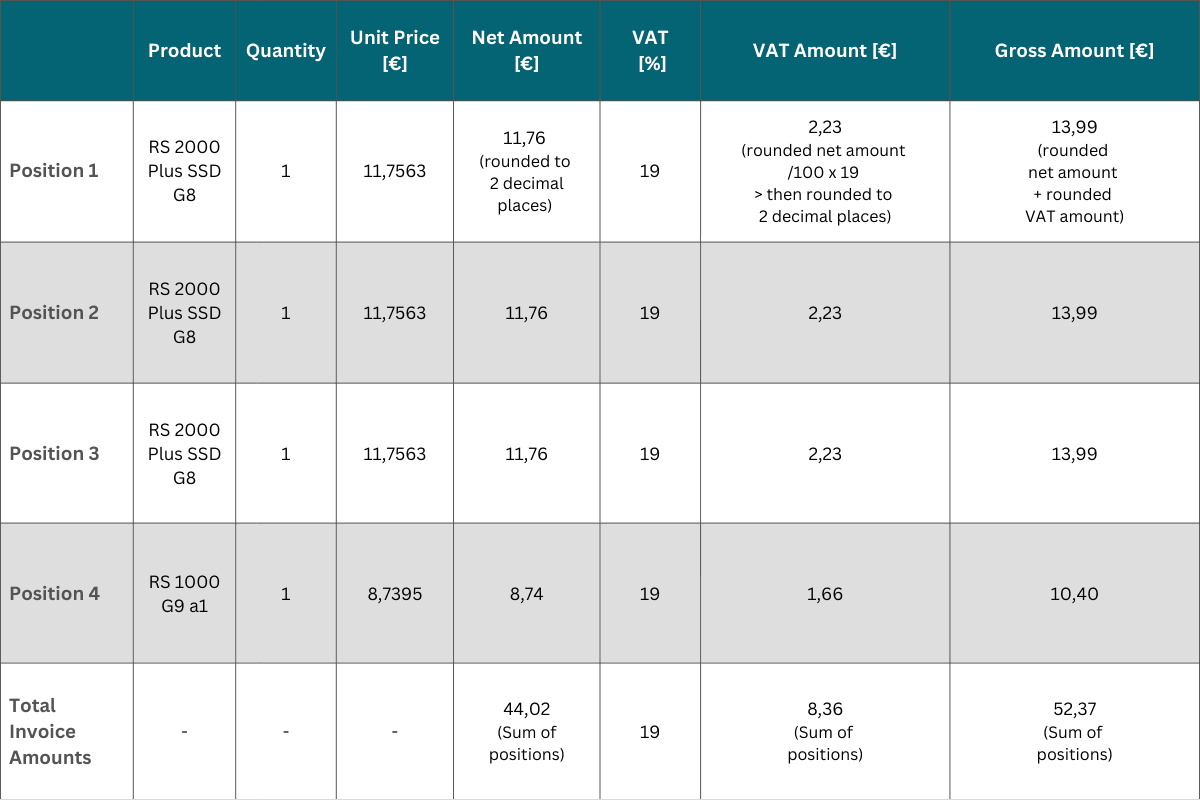
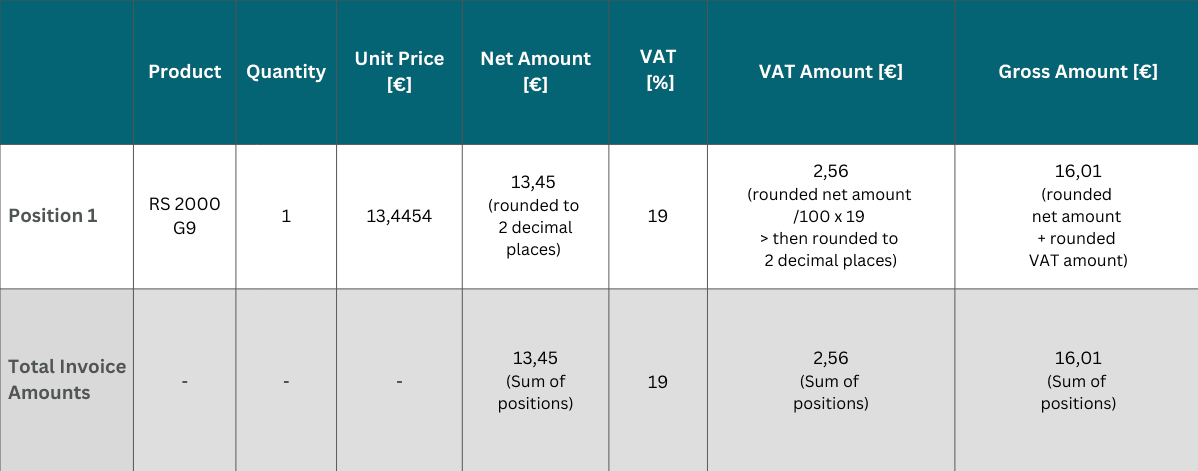
- Each position (= product) is calculated individually:
- Total net price
- VAT amount
- Gross amount
- All amounts are rounded directly to two decimal places per position.
- The final invoice amounts (net, VAT and gross) are calculated by adding the rounded individual values.
3. Why Do Cent-Level Differences Occur?
Since each invoice item is now rounded at the position level, a difference of ±1 cent may occur for multiple items in the net, VAT, and gross amounts. The extent of the difference depends primarily on the number of positions.
There may be discrepancies between the gross price displayed on the website or in the CCP and the gross price shown on the invoice. This is due to changes in price rounding that have not yet been fully implemented. A solution is currently being developed.
4. Viewing Invoices in the Customer Control Panel
For a detailed view of your invoices, open them in the Customer Control Panel (CCP). Go to the menu item Invoice and click on the Magnifying Glass Icon in front of the relevant invoice. You will then see detailed information for each position that is not visible in the PDF invoice.
5. Examples
For illustration purposes, find two examples given below:
Example 1
Old Calculation Method (Invoice-Based)
New Calculation Method (Position-Based)
Example 2
Old Calculation Method (Invoice-Based)
New Calculation Method (Position-Based)